
FEBRUARY 4, 2026 • 8 min read
Nigerian Architecture's Identity: Between Borrowed Forms and Genuine Expression


Written by X35 Projects Editorial Team — Architecture & Design, Lagos, Nigeria
From colonial-era buildings to Lagos's glass towers, Nigerian architecture has always been negotiating between imported ideas and indigenous forms. The next chapter may finally be written from within.
A built environment shaped by other people's histories
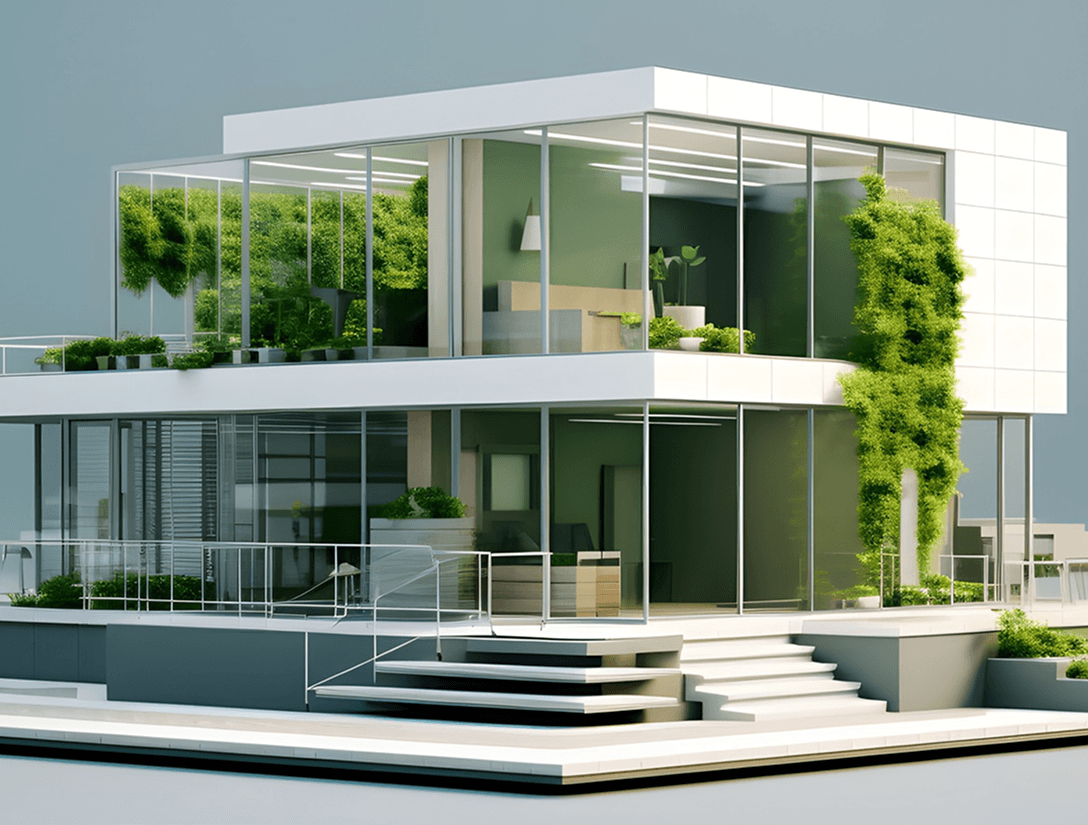
Walk through the older parts of Lagos Island and you pass through layers of architectural history that do not quite belong together. There are the Victorian-era buildings of the colonial administration, built to project authority and familiarity in an unfamiliar place. There are the Brazilian-influenced houses of the returning Afro-Brazilian community, ornate and particular and unlike anything that evolved organically from the Yoruba settlements that preceded them. There are the modernist blocks of the post-independence era, optimistic in their clean lines and their promise of a new national identity, many of them now crumbling in the coastal heat. And there are the glass towers of the recent development boom, which could as easily be in Dubai or Singapore as in Lagos.
Nigerian architecture has always been in negotiation: with colonial inheritance, with imported modernism, with the global aesthetic machine that produces a style for every market and exports it everywhere simultaneously. The question of what Nigerian architecture actually is — as distinct from what has been built in Nigeria — is one that architects, critics, and developers are only beginning to ask with the seriousness it deserves.
“The question of what Nigerian architecture actually is — as distinct from what has been built in Nigeria — is only beginning to be asked with the seriousness it deserves.”
The colonial frame that still structures how we build
The colonial built environment in Nigeria did not simply impose British buildings on Nigerian land. It imposed British spatial logic — the organization of uses, the hierarchy of spaces, the relationship between public and private — on an urban culture that organized space very differently. Pre-colonial Yoruba compounds, for example, were organized around communal courtyards that were simultaneously domestic and social spaces: private enough for family life, open enough for community interaction. The colonial street, with its individual plots, fenced boundaries, and clear separation of indoor and outdoor life, replaced this spatial logic without acknowledging what was being lost.
This substitution has consequences that are still visible in the built environment today. The compulsion to enclose and secure — the high walls, the electric fences, the gated estates — is partly a practical response to security concerns, but it also reflects the internalization of a spatial model that separates the family from the community in ways that traditional Nigerian spatial culture did not. Contemporary Nigerian architects working on residential projects are increasingly asking whether there are ways to recover the social density of the compound model within the constraints of contemporary urban development.
The modernist project and its Nigerian chapter
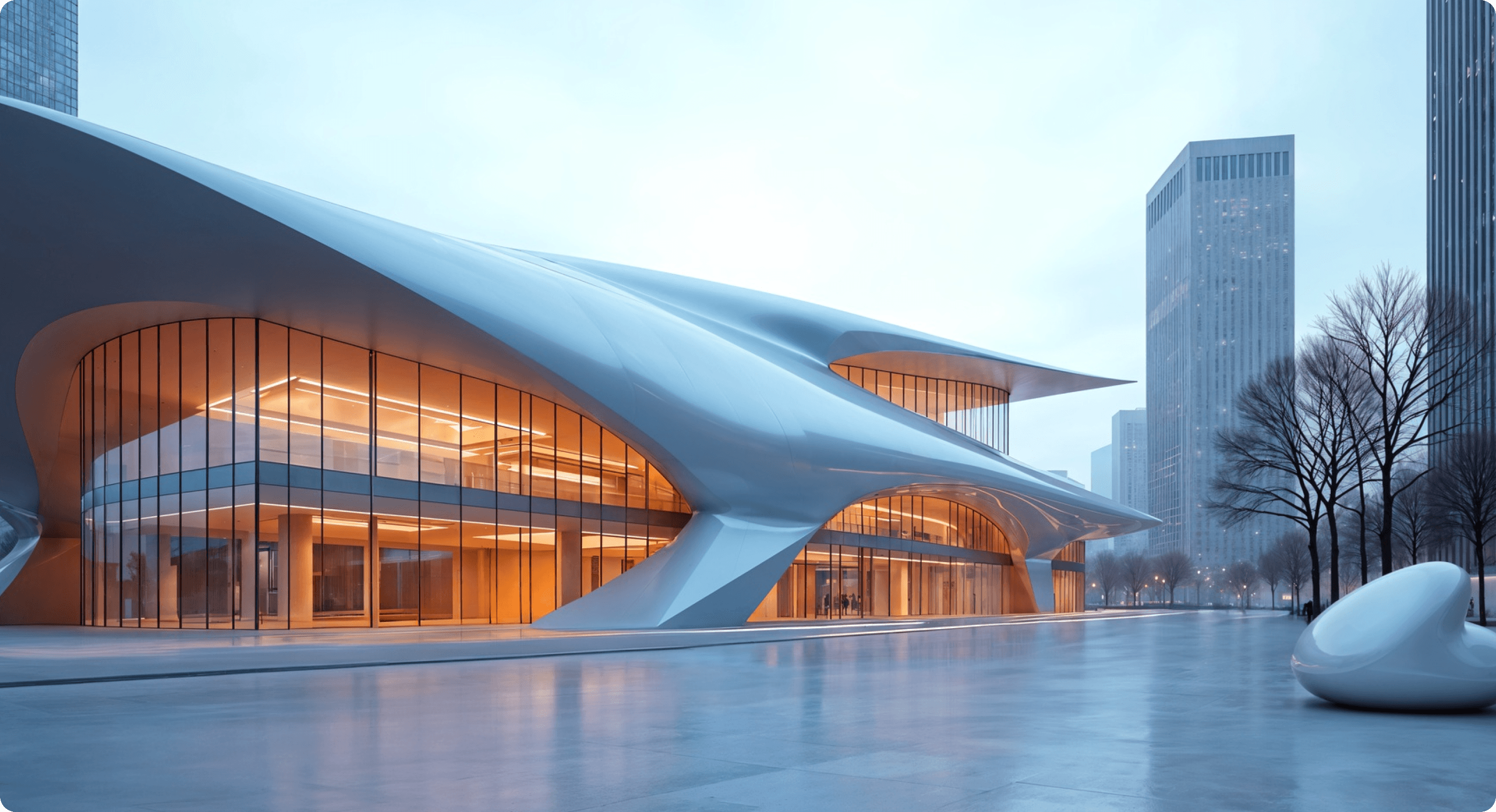
Nigerian independence in 1960 came with an architectural programme. The new national capital at Abuja, designed by international firms and built from scratch in the centre of the country, was one of the great modernist urban planning projects of the late 20th century — and one of the most revealing of modernism's limits. The city was designed for an abstract citizen: legible, organized, efficient. It produced a capital that works as administrative infrastructure and fails as a lived city, its wide roads hostile to pedestrians, its zones separated by commuting distances, its public spaces monumental in scale and empty of life.
Lagos, by contrast, was never planned. It grew by accretion, improvisation, and the relentless ingenuity of people making urban life work in the absence of adequate infrastructure. It is messy, inefficient, often brutal in the demands it makes of its residents. It is also one of the most vital cities in the world: dense, mixed-use, culturally intense, economically entrepreneurial in ways that no planned city has ever replicated. The contrast between Abuja and Lagos is a lesson in what modernist planning gets wrong about the relationship between design and life.
Contemporary Nigerian architects are, on the whole, more influenced by Lagos than by Abuja. The texture of Lagos — its compressed scales, its programmatic mixing, its layered temporal depth — is increasingly recognized as a design resource rather than a planning failure to be corrected.
What makes Nigerian architecture Nigerian?
The question sounds simple and is not. It is not answered by using locally produced materials, though that is a meaningful contribution. It is not answered by decorating a building with Adinkra symbols or Yoruba textile patterns, though cultural reference can be part of a genuine formal language. It is not answered by refusing to engage with international architectural developments, as if isolation would produce authenticity.
Nigerian architectural identity, when it emerges with real conviction, seems to come from something harder to define: a spatial intelligence that has internalized the rhythms of Nigerian social life and found built form for them. The understanding that in many Nigerian contexts, the threshold between inside and outside is not a wall but a gradient — a series of spaces that move from fully public to fully private through intermediate zones that are both. The understanding that shade, cross-ventilation, and the management of tropical light are not optional refinements but the fundamental conditions of habitable space. The understanding that a building's relationship to the street, to community, to the informal economy happening around it, is part of its brief whether or not the client has put it in the programme.
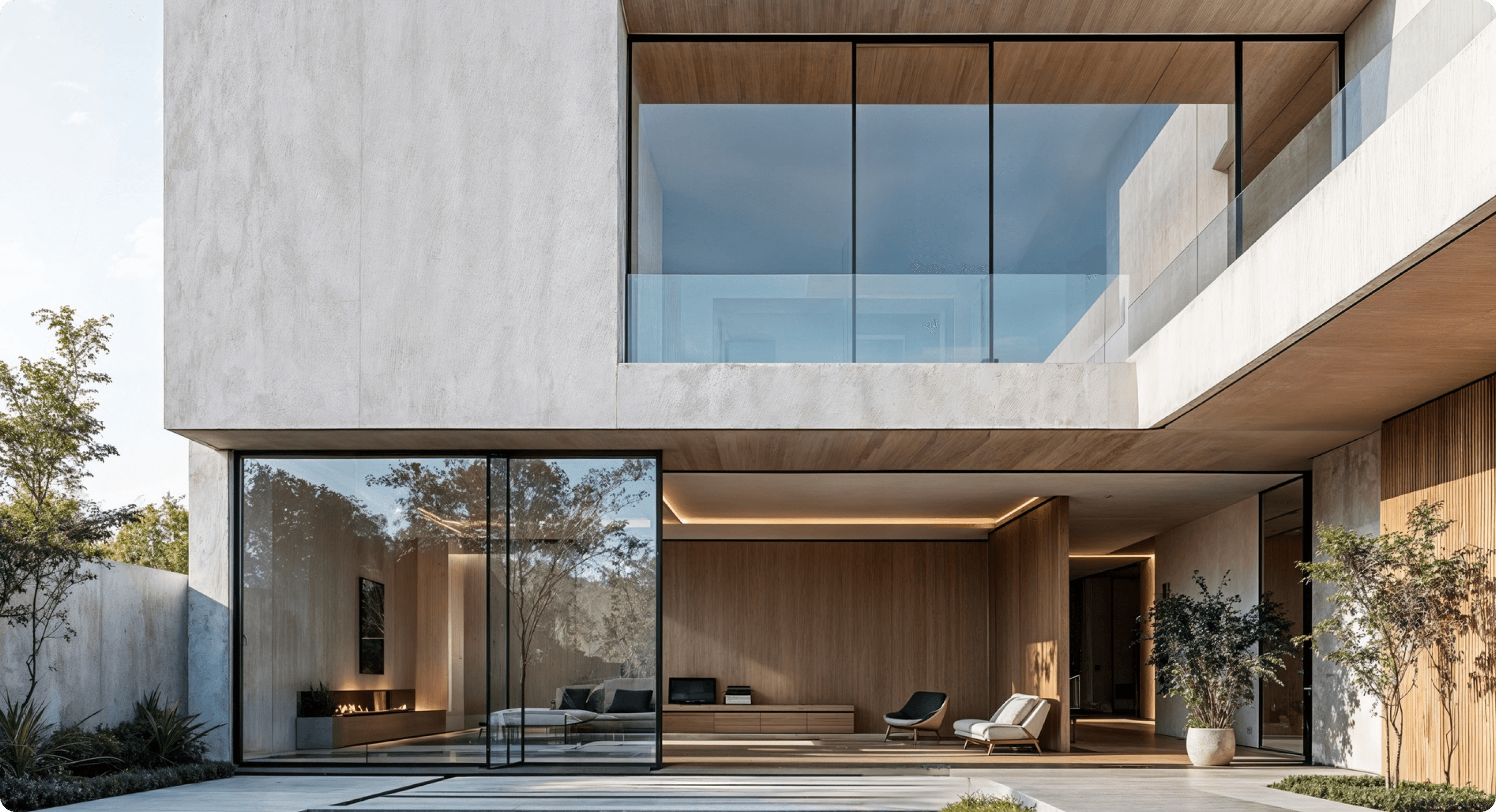
“Nigerian architectural identity comes from a spatial intelligence that has internalized the rhythms of Nigerian social life — and found built form for them.”
Lagos as laboratory: a city designing itself in real time
Lagos is unique among African cities in the intensity of its architectural production and the diversity of its practitioners. In the last two decades, a generation of Nigerian architects trained both locally and internationally has returned to — or remained in — Lagos to build practices that engage seriously with the city on its own terms. The work coming out of this generation is not trying to produce a 'Lagos style' in the way that postmodern architecture tried to produce a historical pastiche. It is trying to make buildings that are specific to their place and their moment: responsive to climate, honest about materials, connected to the social life of their context.
Interior design in Lagos has followed a parallel trajectory. The best contemporary interior design work in Nigeria draws on a rich palette of local materials — handwoven textiles, artisanal ceramics, locally quarried stone, reclaimed timber — not as decorative gestures but as genuine structural elements of the design language. At X35 Projects, this commitment to material specificity runs through every project: the belief that a space designed for Lagos should look and feel like it could only be in Lagos, not like a version of something seen in an international design magazine.
The vernacular lessons that contemporary designers are finally learning
The most powerful resource for a genuinely Nigerian architectural identity may be the vernacular building tradition that was, until recently, largely dismissed as backward or irrelevant to contemporary practice. Vernacular building in Nigeria — the compound houses of the Yoruba, the decorated walls of the Hausa, the pile dwellings of the Niger Delta communities — represents thousands of years of accumulated knowledge about how to build in the Nigerian climate, from locally available materials, for the social structures and spatial needs of Nigerian communities.
This knowledge is not transferable wholesale into contemporary practice. The scale, the technology, and the social context have all changed. But the underlying intelligence — about orientation, shading, ventilation, material thermal mass, the organization of communal space — remains entirely relevant. Contemporary Nigerian architects who engage seriously with the vernacular tradition are not doing historical preservation. They are mining a research archive of climate-responsive, culturally specific design solutions that no amount of imported architectural theory can replicate.
Building a genuine identity in the 21st century
Nigerian architecture's identity crisis — the gap between what is built in Nigeria and what could constitute a genuine Nigerian architecture — is not resolved. But it is increasingly acknowledged, and the direction of travel among the most interesting practitioners is clear.
Buildings that are honest about their materials and their climate. Spaces that are organized around the actual social patterns of Nigerian life rather than imported spatial models. Architecture that is technically ambitious and culturally specific simultaneously — that knows what is happening in Tokyo and Copenhagen and uses that knowledge in service of making better buildings in Lagos and Abuja and Port Harcourt.
The borrowed forms are not going away. Lagos will continue to build glass towers and gated estates, because that is what a portion of the market wants and what developers know how to sell. But alongside and within those forms, a different architecture is emerging: more rooted, more specific, more honest about where it is and what it is for. That architecture is still being defined — which is to say, it is still being built. And what is being built in Lagos right now, by the best practitioners working in the city, is beginning to look like something that belongs here.
That is not a small thing. After a century of borrowed forms, it is, in fact, everything.
More Articles
FEBRUARY 4, 2026
Nigerian Architecture's Identity: Between Borrowed Forms and Genuine Expression
From colonial-era buildings to Lagos's glass towers, Nigerian architecture has always been negotiating between imported ideas and indigenous forms. The next chapter may finally be written from within.
MARCH 4, 2026
The 15-Minute City Revisited: Lessons for Lagos
Paris proved the 15-minute city concept could reshape urban life. Now cities from Bogotá to Nairobi are trying — with mixed results. What Lagos can learn from a decade of experiments in proximity-based urban planning.
FEBRUARY 18, 2026
Mass Timber and the Forest Question: Sustainable Construction in Nigeria
Cross-laminated timber promises a greener future for construction — but harvesting at scale demands uncomfortable conversations about forests, carbon, and whether sustainable architecture in Nigeria is truly possible.
