
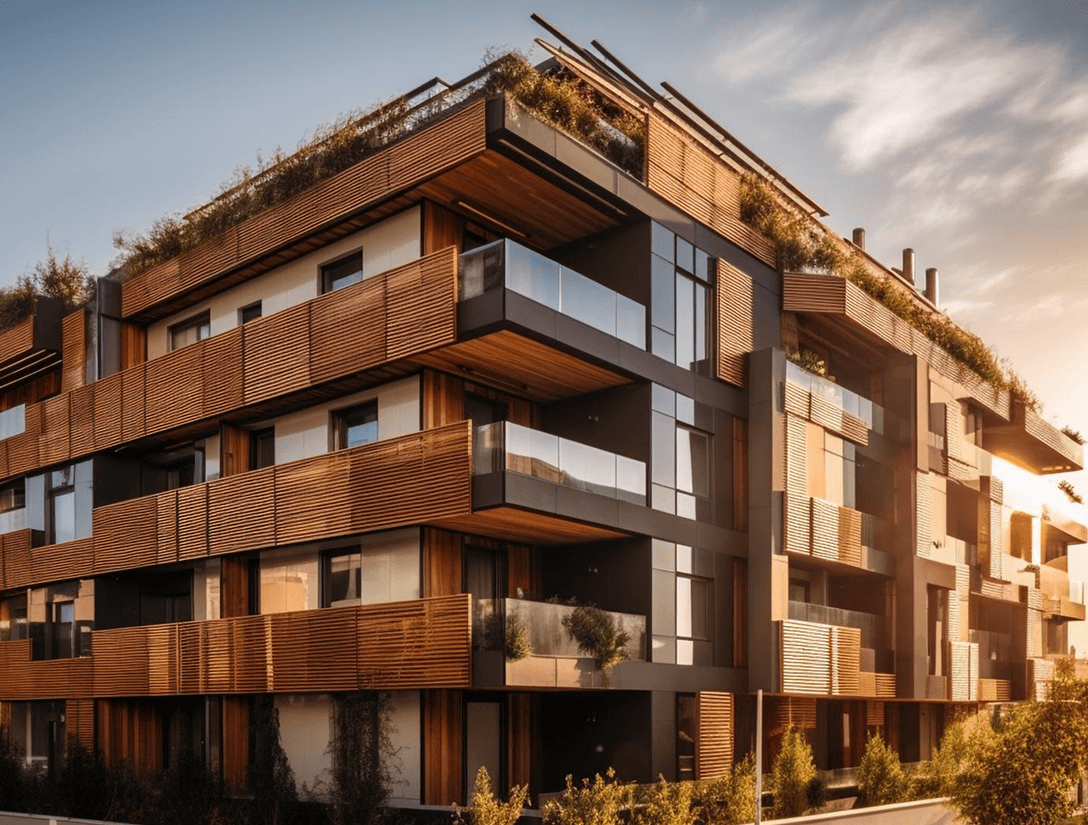
MARCH 18, 2026 • 6 min read
After Postmodernism: What Comes Next in Architecture?


Written by X35 Projects Editorial Team — Architecture & Design, Lagos, Nigeria
The ironic playfulness that defined postmodern architecture is giving way to something more earnest, more climate-conscious, and harder to name. A look at where contemporary architecture is actually heading.
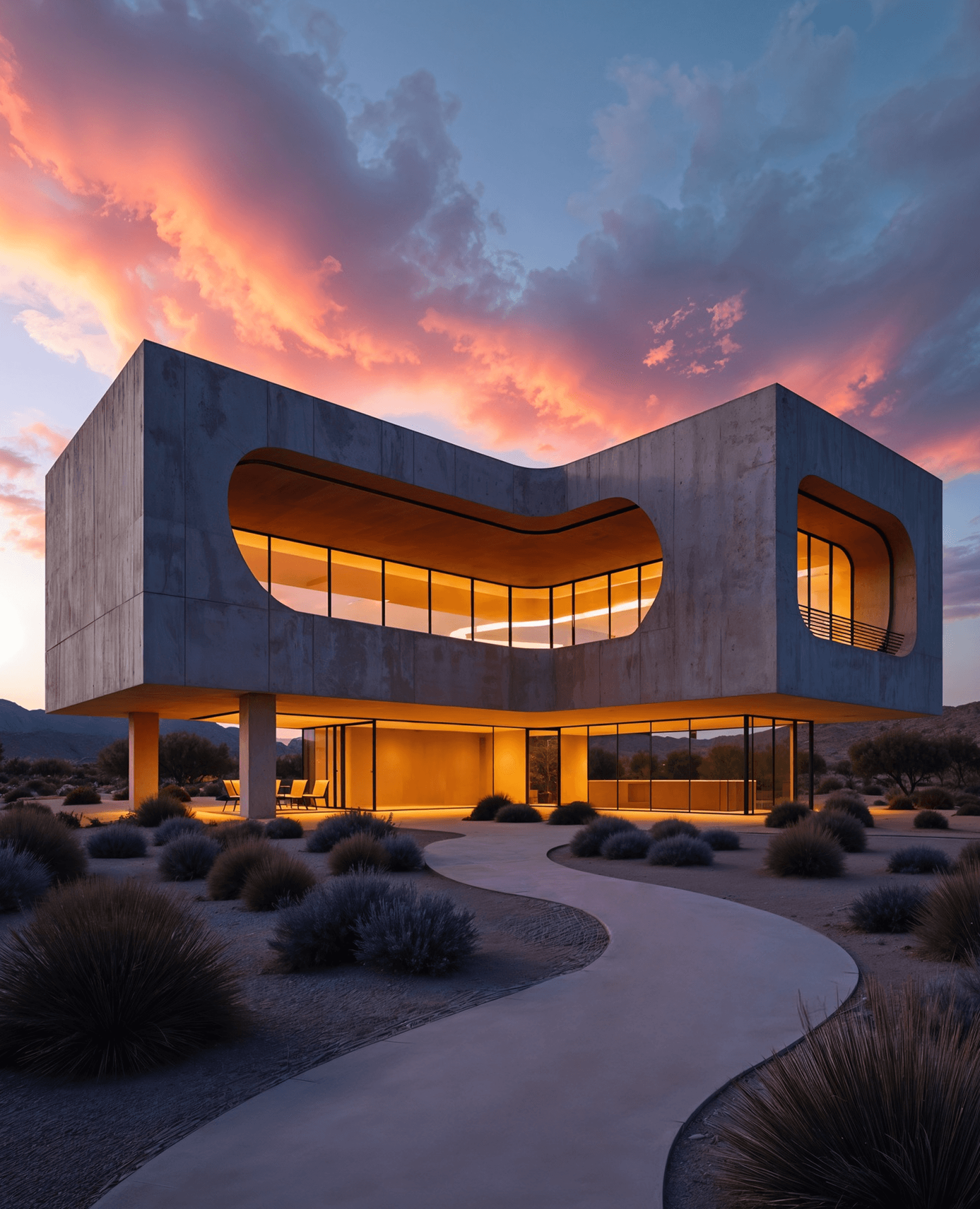
The era that knew too much
Postmodern architecture arrived with a particular kind of confidence: the confidence of disbelief. It knew that modernism's grand project had failed, or at least over-promised. It knew that form didn't have to follow function, that ornament wasn't necessarily crime, that irony was a valid structural element. For roughly three decades — from the late 1970s through the early 2000s — it produced buildings that quoted history, winked at convention, and decorated their surfaces with meaning that was simultaneously sincere and mocking.
Then, gradually, it ran out of things to say. Irony is a posture that exhausts itself. The joke of the postmodern building — look, we're using columns that don't hold anything up — can only land once before it becomes the new convention. By the 2010s, postmodernism had become what it once mocked: an established style, reproduced out of habit rather than conviction. The question of what would come next had been accumulating for years before anyone felt confident enough to answer it.
“Irony is a posture that exhausts itself. By the 2010s, postmodernism had become what it once mocked.”
What postmodernism actually did to buildings
To understand what comes after, it helps to be precise about what postmodernism actually changed in architectural practice. It reintroduced historical reference and ornament, which modernism had suppressed. It legitimized the idea that buildings should communicate — that a facade was a text to be read, not just a skin to be optimized. It made space for regional and cultural particularity in an era when modernism's international style was flattening the built world into a single aesthetic language.
These were real contributions. The problem was not the ideas themselves but the way they calcified into a set of recognizable moves: the knowing pediment, the oversized keystone, the colour-blocked facade, the classical detail rendered in cheap materials. By the late 1990s, postmodern buildings were being produced industrially, by developers who had absorbed the aesthetic without the critical intelligence that originally motivated it. The style had been decoupled from the argument.
What contemporary architecture is searching for — and beginning to find — is a way to retain postmodernism's genuine insights while abandoning its mannerisms. How do you make buildings that communicate without performing irony? How do you reference history without pastiche? How do you allow for cultural particularity without producing themed environments? These are the questions driving the most interesting architectural work being done today, including in Nigeria.
The movements that followed, and why none of them fully landed
Several successor movements have been proposed, tried, and found partially wanting. Parametricism — the use of computational tools to generate complex organic forms — produced spectacular individual buildings but struggled to become a coherent architectural language. Deconstructivism fractured the stable certainties of both modernism and postmodernism, but its vocabulary proved too specialized, too expensive, and too focused on formal drama to scale into everyday practice. The new minimalism of the early 2000s offered formal clarity but often felt cold, evacuated of the cultural richness that postmodernism had reintroduced.
What has emerged instead is not a single named movement but a set of shared preoccupations that are beginning to cohere into something recognizable. Climate responsiveness. Material honesty. A renewed interest in craft and tactility. A willingness to engage with local and vernacular traditions not as sources of quotation but as genuine structural and spatial resources. An earnestness — unfashionable as that word sounds — about what buildings are actually for.
Africa's complicated relationship with architectural fashion
For Nigerian architects and designers, this history has a particular resonance, because postmodernism arrived in Nigeria already out of date. The colonial built environment had imported European classicism; the post-independence era imported modernism's international style; by the time postmodern aesthetics began appearing on Lagos buildings in the 1990s and 2000s, the movement was already entering its decline in the West.
This time-lag is not simply a story of periphery following centre. It reflects something more structural: the architecture of a rapidly developing economy does not move through intellectual fashions at the same pace as the architecture of a stable, wealthy one. Developers and commissioners are responding to urgent practical needs — office space, housing, commercial facilities — not to aesthetic debates in architectural journals. The style that gets built is the style that signals value to investors and tenants, and in Lagos, that style has often been whatever was fashionable in London or Dubai five years earlier.
The result is a built environment that is stylistically heterogeneous, historically scrambled, and yet, in its best examples, genuinely inventive. Because Nigerian architects are working at the intersection of multiple traditions — local vernacular, colonial inheritance, global contemporary — they are sometimes freer than their European counterparts to synthesize rather than choose.
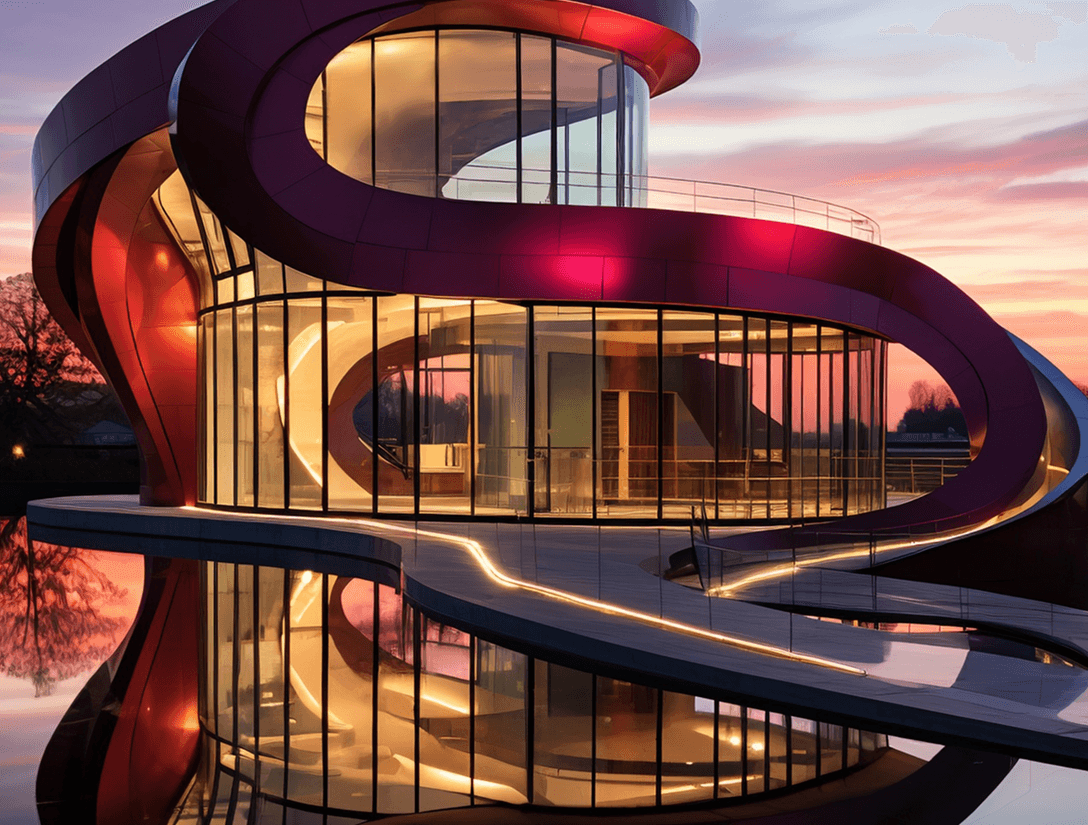
What sincerity looks like in built form
The successor to postmodernism, insofar as one is emerging, might be described as a new sincerity. Not a return to modernism's dogma — the idea that there is one correct rational answer to every architectural problem — but a genuine recommitment to the idea that buildings should be good for the people who use them, and honest about how they were made.
Material honesty is one manifestation of this. Buildings that show their structure, that use materials in ways that reflect their actual properties, that do not clad concrete in marble-effect tile to pretend to a grandeur that was never there. In Lagos, where the gap between how buildings present themselves and how they perform is often wide, this kind of honesty has particular moral weight. A building that admits what it is tends to age better — both materially and aesthetically — than one that aspires to be something else.
Another manifestation is climate responsiveness. The best contemporary architecture in Nigeria and across West Africa is taking seriously the question of how buildings can be designed for the local climate: oriented for cross-ventilation, shaded from the intense equatorial sun, detailed to manage the heavy rainfall and humidity that Lagos experiences for much of the year. This is not a concession to circumstance but a return to the kind of place-specific intelligence that modernism's international style and postmodernism's historical quotation both, in different ways, obscured.
“The most interesting new architecture is earnest about what buildings are actually for — and honest about how they were made.”
Where architecture goes from here
The successor to postmodernism is not yet fully named. It may never be — the era of grand architectural movements, each with its manifesto and its signature gesture, may itself be over. What is emerging instead is a more distributed, pluralistic practice: architecture that is simultaneously local and internationally connected, technically sophisticated and materially grounded, responsive to climate and culture and the specific conditions of the site.
For firms like X35 Projects, working in Lagos and across Nigeria, this moment offers a genuine opportunity. The questions that contemporary architecture is asking — about climate, about cultural identity, about honesty in construction — are questions that the Nigerian context makes urgent in ways that more comfortable built environments do not. The city is a laboratory for a kind of earnest, practical, culturally specific architecture that the global discipline is only beginning to recognize it needs.
After postmodernism, what comes next may well be built here first.
More Articles
FEBRUARY 4, 2026
Nigerian Architecture's Identity: Between Borrowed Forms and Genuine Expression
From colonial-era buildings to Lagos's glass towers, Nigerian architecture has always been negotiating between imported ideas and indigenous forms. The next chapter may finally be written from within.
MARCH 4, 2026
The 15-Minute City Revisited: Lessons for Lagos
Paris proved the 15-minute city concept could reshape urban life. Now cities from Bogotá to Nairobi are trying — with mixed results. What Lagos can learn from a decade of experiments in proximity-based urban planning.
FEBRUARY 18, 2026
Mass Timber and the Forest Question: Sustainable Construction in Nigeria
Cross-laminated timber promises a greener future for construction — but harvesting at scale demands uncomfortable conversations about forests, carbon, and whether sustainable architecture in Nigeria is truly possible.
